
A sperm-sorting technology, refined by over a decade of clinical research and development.
MicroSort separates X- and Y-bearing sperm using validated flow cytometry — producing an enriched sample with reproducible, documented accuracy. Here's how the platform works, and how it deploys in your laboratory.
Methodology Summary
MicroSort uses a validated flow-cytometry process to separate X- and Y-bearing sperm based on DNA content differences. The methodology is published and peer-reviewed.
- Sample Preparation: Semen sample is liquefied and diluted to optimize cell sorting concentrations.
- Fluorescent Staining: A non-damaging fluorochrome stain binds to the DNA inside the sperm cells.
- Laser Excitation: Cells pass individually through a laser beam, exciting the fluorochrome.
- Measurement & Deflection: Because the X chromosome carries approximately 2.8% more DNA than the Y chromosome, it shines brighter. The cytometer detects this difference and applies an electrostatic charge to deflect the target cells.
- Enriched Sample Delivery: The sorted, enriched sample is collected and concentrated for artificial reproductive techniques (IUI or IVF).
Sperm Sort Flow Diagram
Deflection is determined by real-time measurement of the fluorescence peak area, reflecting total cellular DNA.The 5-Step Sorting Process
To see how this process works in 3D, watch this animation:
This 3D visualization shows the complete separation process
Laboratory Deployment Model
MicroSort is deployed as a licensed service within your existing laboratory environment. Equipment, training, and validation protocols are provided by the MicroSort technical team. Your embryology and lab staff remain in operational control.
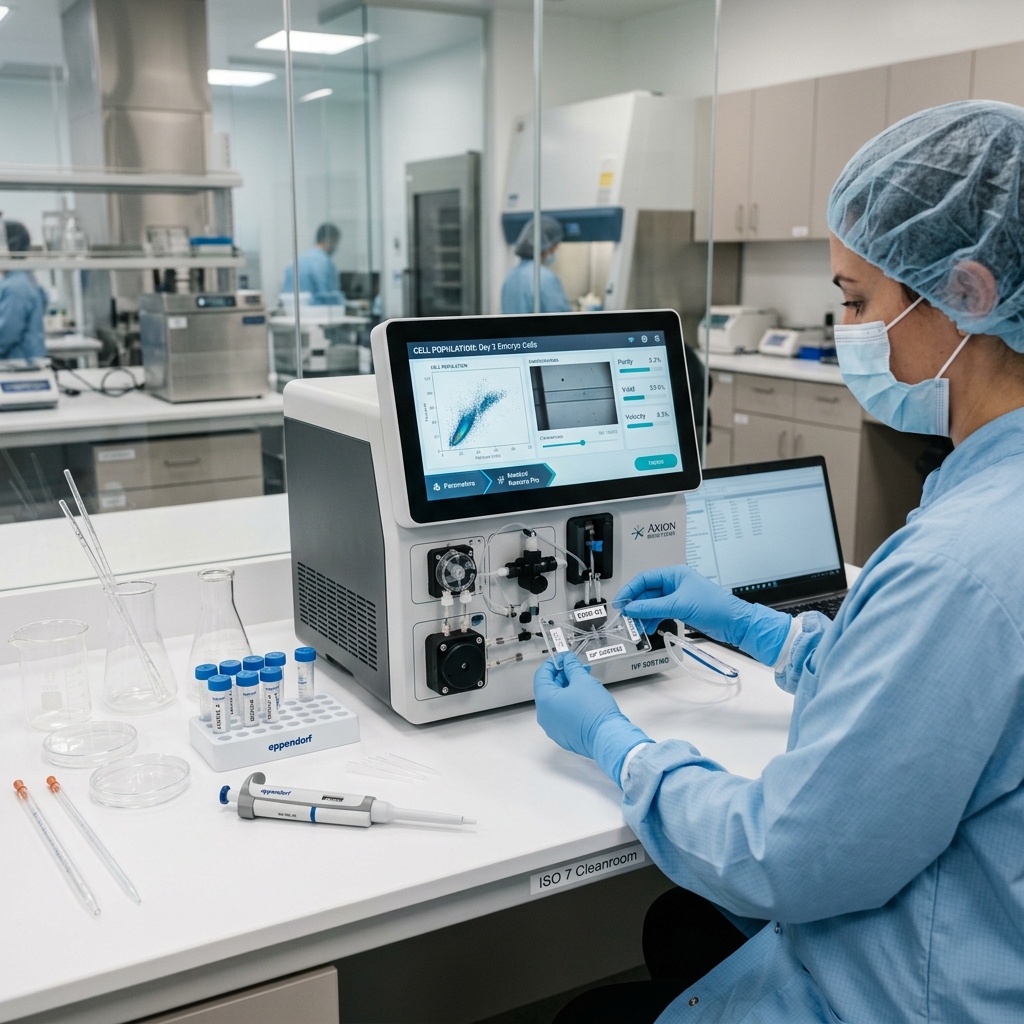
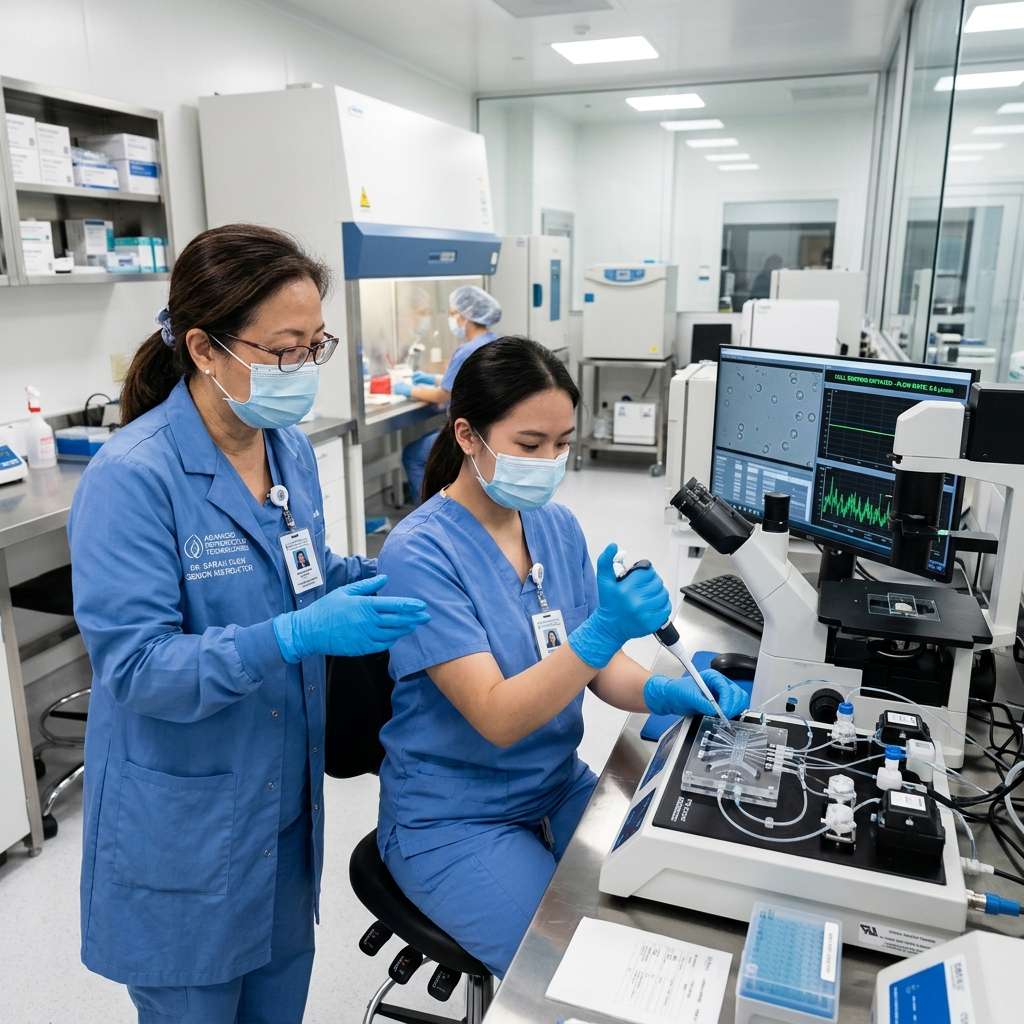
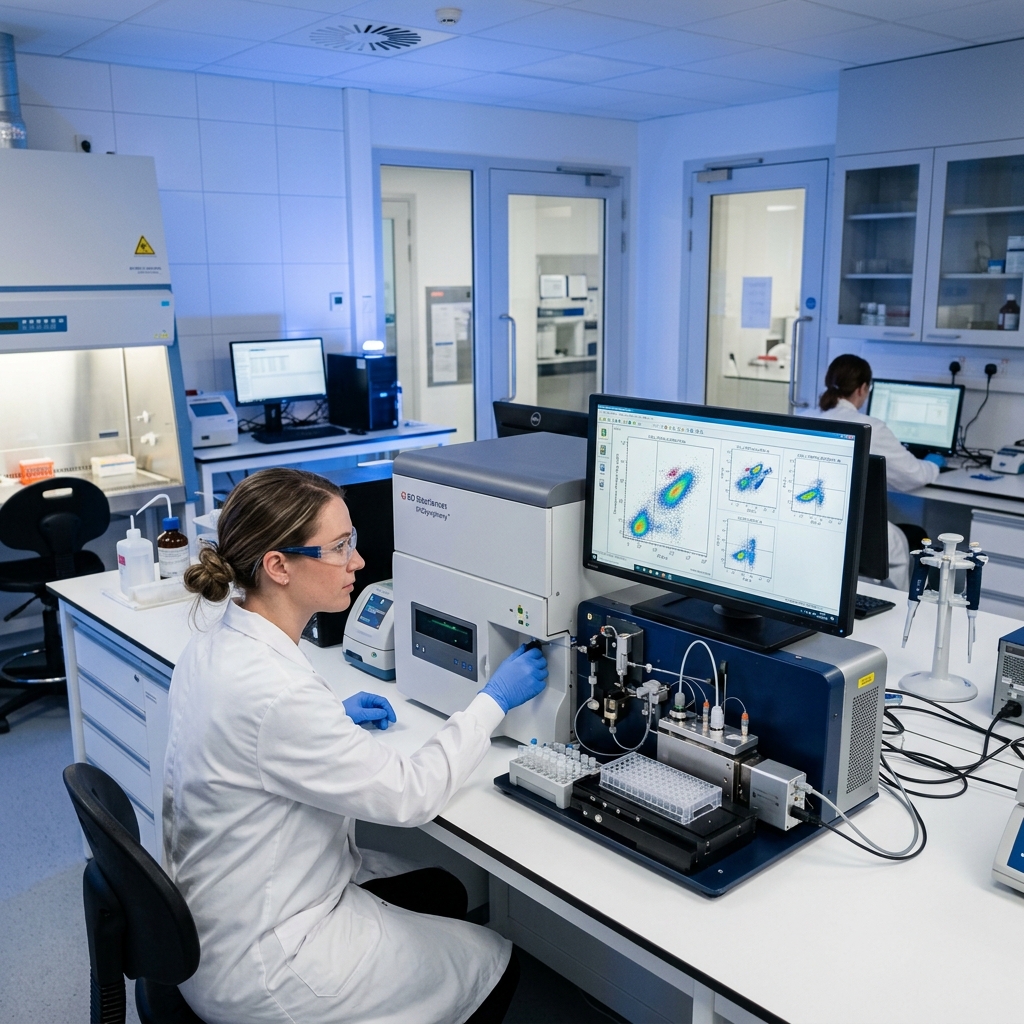
See how this equipment operates in a real laboratory:
Watch a trained technician demonstrate the complete operational workflow
Workflow Integration
MicroSort fits into your existing IUI and IVF workflows without restructuring. The diagram below illustrates a typical patient journey at a partner clinic.
Patient intake
Screening and clinical eligibility assessment.
Sample collection
Semen sample collection and initial liquefaction.
MicroSort process
Fluorescent staining, laser measurement, and deflection sort.
ART procedure
IUI insemination or IVF/ICSI fertilization.
Follow-up
Post-procedure care and clinical monitoring.
Compatibility with PGT
MicroSort is frequently combined with Preimplantation Genetic Testing (PGT-A or PGT-M) to provide an additional confirmation layer. The combination is the most powerful configuration for family-balancing patients seeking high-certainty outcomes and for couples reducing the risk of genetic-linked conditions.
Dual-Layer Verification
Regulatory & Jurisdiction Notes
Sperm-sorting and sex-selection technologies are regulated differently across jurisdictions. The MicroSort team provides jurisdiction-specific implementation guidance during the partnership process. Partnering clinics are responsible for ensuring compliance with all applicable local regulations.
Ready to review technical specifications?
Get in touch with our technical team to find out more information.
Request technology documentation